Research
Thesis
Development of a Multi-Stage Spatial Transition-Based Method for Hierarchical Classification of Traffic Incident Impact Zones
Master's Thesis for the Degree of Master of Engineering in Transportation Engineering, Graduate School, Ajou University
Sungmin YooFeb, 2026
This study presents a novel traffic incident impact analysis framework that addresses the limitations of conventional static approaches, which evaluate post-accident congestion solely through instantaneous speed drops or delay levels.
Rather than treating incident-induced congestion as a point-in-time phenomenon, the proposed method interprets it as a dynamic spatio-temporal process encompassing transition, propagation, and recovery.
Using SUMO-based microscopic simulation data (speed, density, occupancy, and flow at 1-second intervals), the framework operates in two integrated stages.
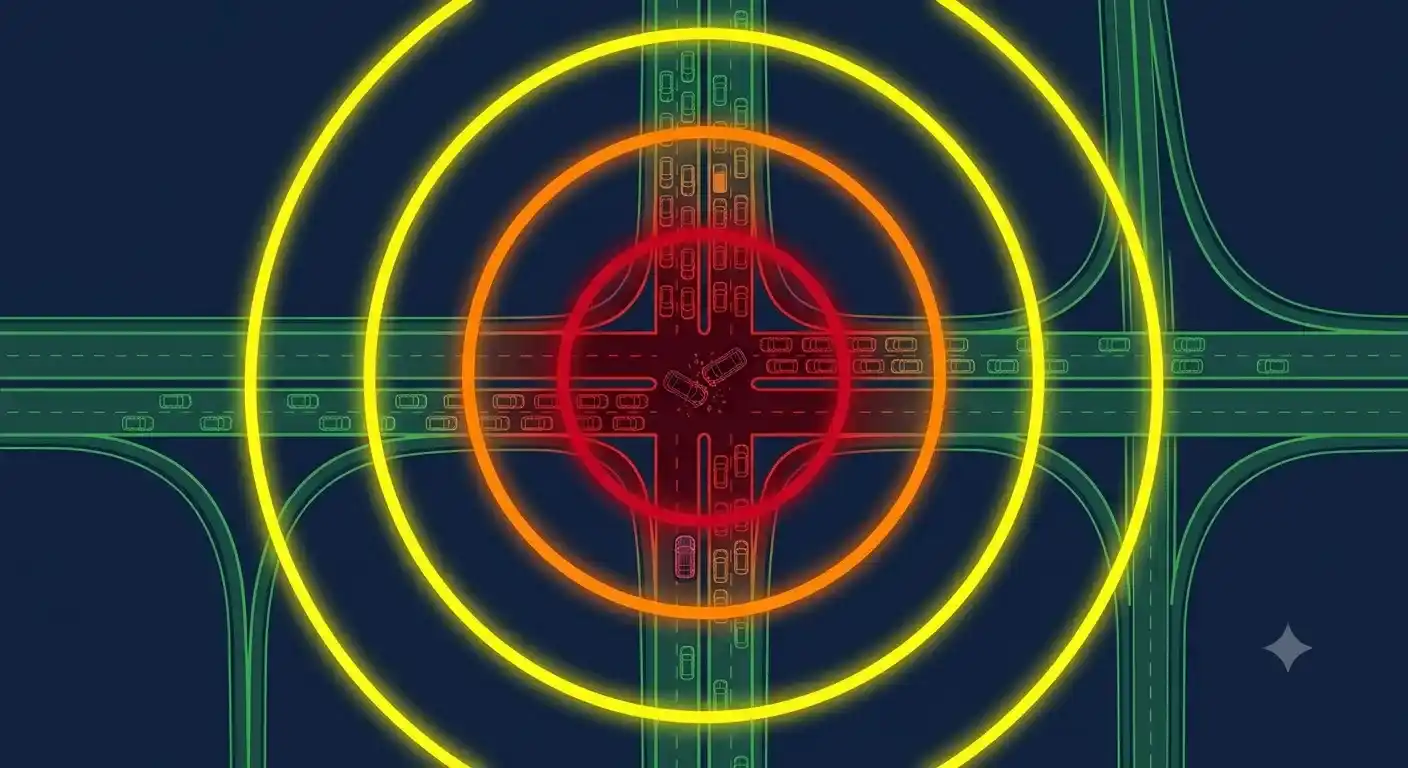
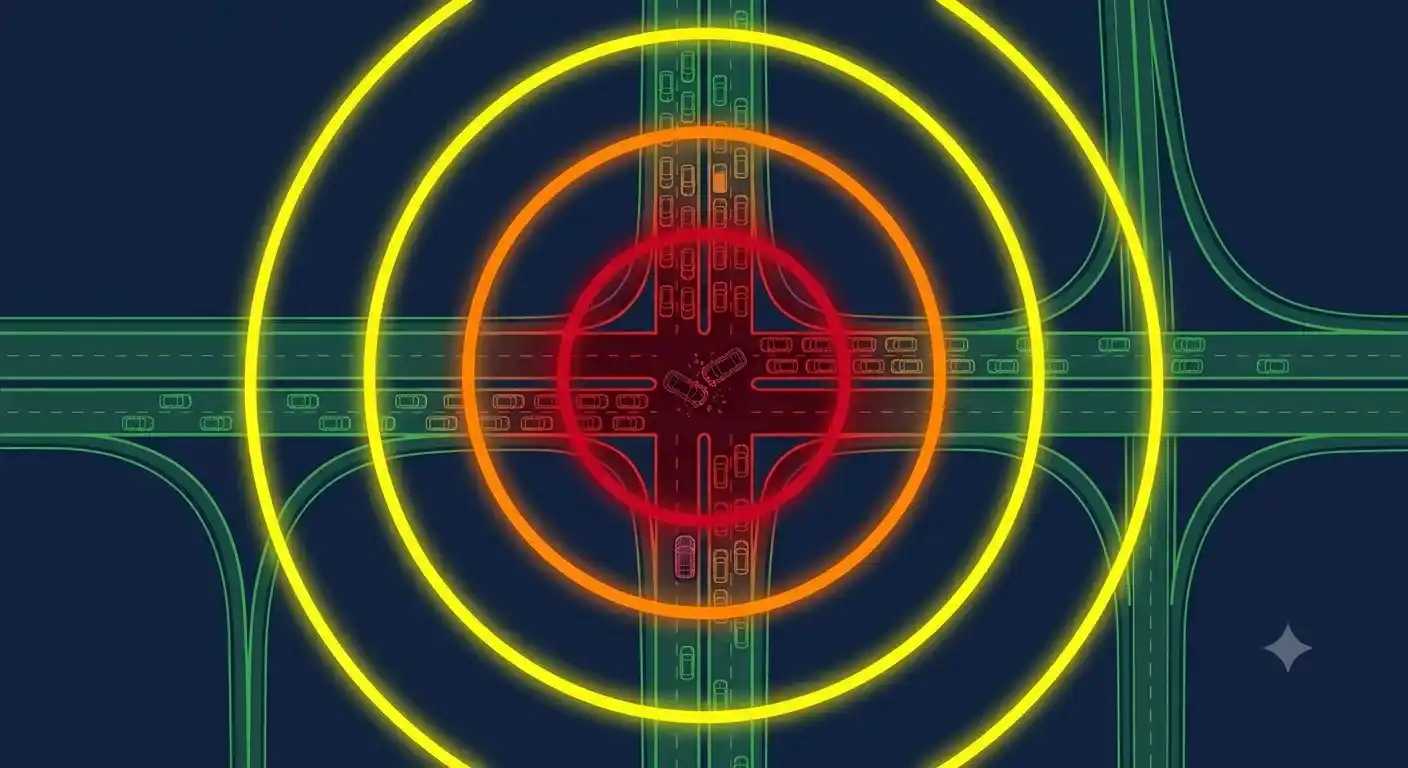
At the macroscopic level, an Isolation Forest-based anomaly detector identifies the onset of abnormal traffic states, and Dynamic Programming-based segmentation partitions the network into concentric impact zones (R1-R3) centered on the incident location.
At the microscopic level, a Region Growing algorithm traces the spatial propagation path of congestion across adjacent links, while a Susceptible-Infected-Recovered (SIR) model quantifies the congestion onset, peak, and recovery timing for each link.
Results demonstrate that incident-induced congestion propagates not randomly, but in a structured, hierarchical pattern, with recovery delays accumulating progressively in outer zones.
The framework outperforms conventional static indicators by revealing where congestion originates, how it spreads, and which segments recover last.